
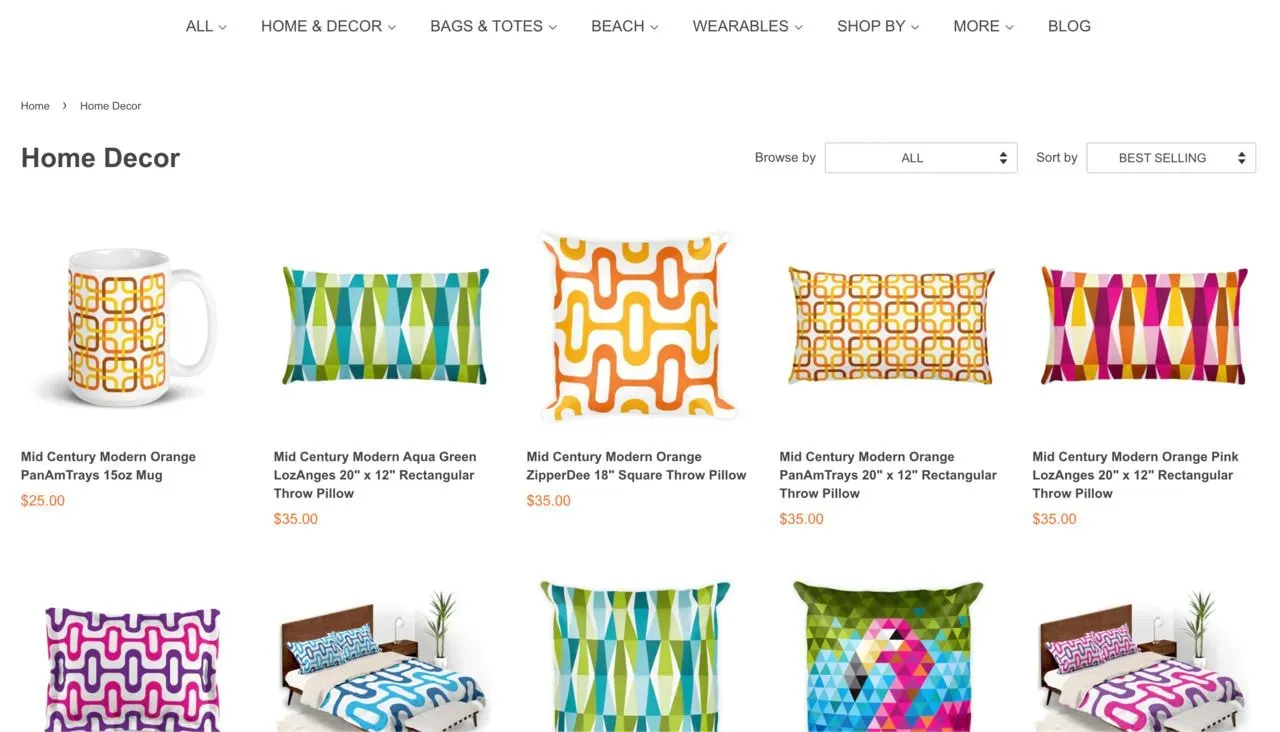
Print on Demand Store offers a flexible, low upfront risk path to launching a business. In this guide you’ll learn how to choose a niche, select the right platform, design compelling products, and create a marketing plan that drives sales. By following practical actions, real-world examples, and clear milestones, you can move from idea to first sale and beyond. This plan helps you build a scalable POD business rather than a single product experiment, with a focus on profitability and sustainable growth. As you progress, you’ll gain print on demand tips, principles of print on demand business, and practical guidance to start a POD store, all aimed at improving POD store profitability and leveraging the best print on demand platforms.
Viewed through a different lens, this venture can be described as an on-demand printing business or a custom merchandise storefront powered by scalable fulfillment. POD commerce emphasizes design-led products and automated production rather than stocking inventory, enabling rapid testing of ideas. The concept is also described through terms like print-on-demand platform and merchandise printing service, signaling reliable suppliers and streamlined order flow. By framing the initiative around niche audiences, strong branding, and value delivery, you can apply the same strategy using different terminology while preserving core goals. Using a latent semantic approach helps search engines connect related topics such as print on demand tips and best print on demand platforms to your content, improving discoverability.
Choosing a Profitable Niche for Your Print on Demand Store
To uncover a profitable niche for your Print on Demand Store, begin with deep market research to identify who would buy and why. Look for gaps in existing offerings, potential for repeat purchases, and connections to subcultures or lifestyle trends. Answer core questions: who is your target customer, what problem does your product solve, and how large is the market? Use signals from Google Trends, keyword research, and social listening to identify long-tail phrases that real customers search for, such as print on demand apparel for fitness enthusiasts or eco-friendly home decor. Document your findings and select one to two core niches to test first, aligning with the goal of moving from idea to first sale rather than a scattershot approach. Related terms like print on demand business and start a POD store can guide your product scope and messaging.
With a niche in hand, validate demand through quick tests and competitive analysis. Create simple product concepts and test messaging to see what resonates with your initial audience. This phase benefits from a clear path rather than a broad, unfocused catalog, supporting the idea to launch a Print on Demand Store with momentum. Keep SEO in mind as you shape your niche; mapping early keywords to your product concepts helps you connect with customers who are actively searching for what you offer. The ongoing focus on print on demand business and start a POD store helps you frame your pivot points and milestones.
Defining Brand and Product Strategy to Accelerate Growth
With a chosen niche, craft a memorable brand that resonates with your audience. Define your value proposition, tone of voice, and visual identity, and decide which product types to offer, such as t-shirts, hoodies, mugs, phone cases, or home decor. Consider margins and price bands, recognizing that POD products often require mindful pricing to cover fulfillment costs and marketing. A strong brand helps you stand out in a crowded market and supports the concept of starting a POD store as a long-term business rather than a one-off project. As you develop product concepts, weave in SEO-friendly names and descriptions to improve discoverability.
In tandem with product concepts, develop a content and keyword strategy that aligns with customer values, whether sustainability, humor, or personal identity. Think in terms of descriptive product stories, value-driven benefits, and clear differentiators. By integrating terms from the broader print on demand ecosystem, you set a foundation for long-term visibility and provide a compelling narrative for shoppers who are evaluating what a Print on Demand Store can offer.
Selecting a Platform and a Reliable POD Partner
Choosing the right platform and a dependable print on demand partner is critical. Many successful POD store owners combine an ecommerce platform such as Shopify or WooCommerce with a POD provider like Printful or Printify to automate production and fulfillment. When evaluating options, compare product catalogs, production locations, shipping times, quality control, and integration ease. This step directly affects POD store profitability since production costs, shipping fees, and integration fees determine your margins. Start with a small, curated set of products to test the pairing of your chosen platform with your POD partner and to measure speed and quality. The idea of identifying the best print on demand platforms becomes a practical guide as you compare performance and reliability.
The performance of your platform and partner pairing has downstream effects on profitability. Test current production times, error rates, and batch consistency to ensure a scalable operation. Use these pilot results to refine your catalog and pricing strategy, and document the lessons learned so future campaigns are grounded in data. This approach helps you progress from a single product experiment to a scalable POD store that grows with demand, guided by insights into POD store profitability and reliability.
Building a Conversion‑Focused Catalog and SEO Strategy
A compelling catalog is the heartbeat of a Print on Demand Store. Create high-quality product images and mockups, write clear product descriptions, and use keyword-rich titles that reflect customer search intent. Each listing should answer likely questions about size, materials, care, return policy, and shipping estimates. Optimize product pages for search by naturally including the focus keyword Print on Demand Store and related terms like print on demand business and start a POD store. Use alt text on images, structured data where possible, and category pages that guide visitors toward popular collections. A well-organized catalog not only improves SEO but also makes it easier for shoppers to browse and convert, which is essential for POD store profitability.
Beyond individual listings, ensure your catalog structure supports discovery and cross-sell opportunities. Group items into niche-focused collections, enable intuitive navigation, and maintain consistent visual language across pages. By aligning product storytelling with search intent and user intent, you create a frictionless experience that translates into higher conversion rates, repeat visits, and stronger long-term POD store profitability. Integrating print on demand tips into your content creation process helps you stay ahead of trends and customer needs.
Designing a Seamless Storefront and User Experience
Store design should embody your brand and deliver a smooth customer journey. Choose a clean, responsive theme, intuitive navigation, and essential pages such as About, Contact, Shipping and Returns, and FAQs. Implement bulk product filtering to help customers find items by niche, color, or style. Clear calls to action, fast loading pages, and a mobile-friendly checkout are critical. Align your storefront visuals and messaging with the Print on Demand Store concept to reinforce trust and consistency across channels. This step reinforces the Start a POD store idea by ensuring the shopping experience mirrors the promises you make in your product stories.
A well-considered storefront design reduces friction and supports conversion. Pay attention to page performance, accessibility, and consistency between product imagery and on-site copy. Prioritize a streamlined checkout flow, transparent shipping estimates, and a responsive support channel, such as chat or email. By delivering a frictionless, brand-consistent experience, you improve overall POD store profitability and build lasting relationships with customers who will return for future launches.
Launch Marketing, Traffic Acquisition, and Growth Metrics
With your store prepared, develop a launch blueprint that blends organic and paid channels. Implement on-page SEO, publish helpful blog content, and build an email list before or during your launch. Leverage social media, influencer partnerships, and user-generated content to showcase real-world use of your products. Outline a paid plan if budget allows, allocating modest funds to test ads on platforms where your audience spends time. Track metrics such as traffic sources, conversion rate, average order value, and customer lifetime value to understand where money is best spent. Consistent content creation and community engagement are core print on demand tips that drive long-term success, turning your Print on Demand Store into a living growth engine.
As you scale, maintain a rigorous measurement mindset. Regularly review key metrics like margin per order, CAC, and retention rates, and use customer feedback to refine product design and marketing mix. The iterative nature of the POD journey means testing new niches, expanding the catalog, and refining fulfillment workflows. By staying data-driven and curious, you move from initial traction to scalable, repeatable success and ultimately improve POD store profitability.
Frequently Asked Questions
What is a Print on Demand Store and how does it work?
A Print on Demand Store is an ecommerce approach that eliminates upfront inventory by partnering with a POD provider to print and ship products only after a customer orders. You connect a storefront on a platform like Shopify or WooCommerce to a POD partner such as Printful or Printify, and upload your designs. The provider handles production, fulfillment, and returns, while you focus on product concepts, branding, and marketing—a core element of the print on demand business model.
How do I start a POD store and choose a niche?
To start a POD store, begin by validating your audience and choosing 1-2 core niches with passionate buyers. Use tools like Google Trends, keyword research, and social listening to find long-tail phrases customers search for, such as print on demand apparel for fitness enthusiasts. Document findings and test your niches with a small product set before scaling.
What factors influence POD store profitability and how can I improve it?
Key profitability drivers include production costs, shipping fees, platform and payment fees, pricing strategy, and marketing spend. To improve POD store profitability, optimize product margins by choosing the right products, negotiate with providers, test pricing, and focus on high-converting listings and bundles. Track metrics like margin per order and lifetime value to guide decisions.
Which are the best print on demand platforms for a Print on Demand Store?
Choosing the best print on demand platforms means evaluating providers by catalog, print quality, production locations, shipping times, and integration with your ecommerce store. Popular options include Shopify + Printful and WooCommerce + Printify, but the right mix depends on your niche and goals. Compare product ranges, automation, and support to ensure reliable fulfillment for your Print on Demand Store.
What are essential print on demand tips for marketing and SEO?
Optimize your product pages with keyword-rich titles, descriptive descriptions, alt text, and structured data to help your Print on Demand Store appear in search. Publish helpful content, build an email list, and leverage social proof and user-generated content to boost trust and conversions. Use print on demand tips like testing channels, iterating on designs, and focusing on niche audiences to drive steady traffic and sales.
What is a practical step-by-step plan to launch a successful Print on Demand Store?
This plan guides you from idea to first sale and beyond. Start with validating your niche and audience, define your brand and product strategy, pick a platform and reliable POD partner, build a conversion-focused catalog, design a storefront, launch a mixed marketing plan, and establish fulfillment and customer service processes. Measure results, iterate, and scale to turn your Print on Demand Store into a repeatable, profitable business—consistent with the start a POD store approach.
| Step | Focus | Key Actions | Outcomes / Notes |
|---|---|---|---|
| Step 1 | Validate Your Niche & Audience | Market research questions; identify target customer, problem, market size; scan gaps, trends, subcultures; use Google Trends, keyword research, social listening; find long-tail phrases; document findings; test 1–2 core niches. | Clear niche, aligned product scope; path-focused plan. Note related keywords (e.g., print on demand business, start a POD store) to guide messaging. |
| Step 2 | Define Brand & Product Strategy | Define value proposition, tone, visuals; decide product types (tees, hoodies, mugs, etc.); consider margins and pricing; use descriptive, keyword-friendly names; align with sustainability, humor, or identity as needed. | Strong brand helps stand out; supports long-term POD store as a business; SEO-friendly product names/descriptions. |
| Step 3 | Platform & Reliable POD Partner | Choose platform (Shopify, WooCommerce) and POD provider (Printful, Printify); compare catalogs, production locations, shipping times, QC, integrations; start small; test speed & quality; use "best print on demand platforms" as a practical guide. | Better margins & reliable fulfillment; scalable automation; validated platform-partner pairing. |
| Step 4 | Build a Conversion‑Focused Catalog & SEO | Create high-quality images/models; write clear descriptions; keyword-rich titles; answer likely questions (size, materials, care, returns, shipping); optimize pages for search with focus keyword "Print on Demand Store" and related terms; use alt text, structured data, category pages. | SEO-friendly catalog that converts; easier navigation and ranking. |
| Step 5 | Storefront Design & UX | Choose clean, responsive theme; intuitive navigation; essential pages (About, Contact, Shipping & Returns, FAQs); bulk product filtering; clear CTAs; fast loading; mobile-friendly checkout; align visuals with brand messaging. | Consistent shopping experience supporting the POD store concept. |
| Step 6 | Launch Marketing & Traffic | Develop a launch plan blending organic and paid channels; on-page SEO, helpful blog content, email list; social media, influencer partnerships, user-generated content; budget for testing ads; track traffic sources, CTR/CR, AOV, LTV; maintain ongoing content & community. | Foundation for initial traction and scalable growth; data-driven optimization. |
| Step 7 | Fulfillment, CS & Returns | Set expectations for production times and shipping; order tracking; easy returns/exchanges policy; multichannel customer service (email, chat, social); automate order notifications; use data to identify loyalty opportunities. | Improved customer satisfaction and repeat purchases; reduced refunds. |
| Step 8 | Measure, Learn, Iterate | Regularly review metrics (conversion by product, margin per order, CAC); use feedback to refine designs/listings; test niches, expand catalog, optimize fulfillment; maintain growth mindset. | Move from traction to scalable, repeatable success. |
Summary
Conclusion Starting a Print on Demand Store offers a practical path to entrepreneurship with reduced upfront risk. A well thought out niche, strong branding, reliable fulfillment, and a disciplined marketing approach are the pillars of long term success. By following this step by step plan and keeping the focus keyword Print on Demand Store in mind, you align every action with what customers are searching for. The related keywords print on demand business, start a POD store, POD store profitability, print on demand tips, and best print on demand platforms serve as a guidepost for your decisions. Stay curious, stay data driven, and stay committed to delivering products that delight your audience, and your Print on Demand Store will have the best chance to thrive in a competitive market.